

TL;DR: Is a storm forming in the Gulf? Maybe. Is a threat? Probably not, but it’s complicated. I am sometimes accused of downplaying storm threats, but understand my perspective is different from NHC or your local emergency manager, much less your typical weatherblogger or Favorite Local TV Media Personality. This system is a perfect example to discuss these different perspectives …

The situation this morning is that NHC has upped the probability of at least a tropical depression forming to 70%, and cautions that they will likely start advisories later today. Here are their Key Messages for the Tropical Disturbance Over the Northern Gulf of America (AL97). I won’t be at all surprised if they start them at 11am, and unless something dramatic changes they will almost certainly be doing so by 5pm.
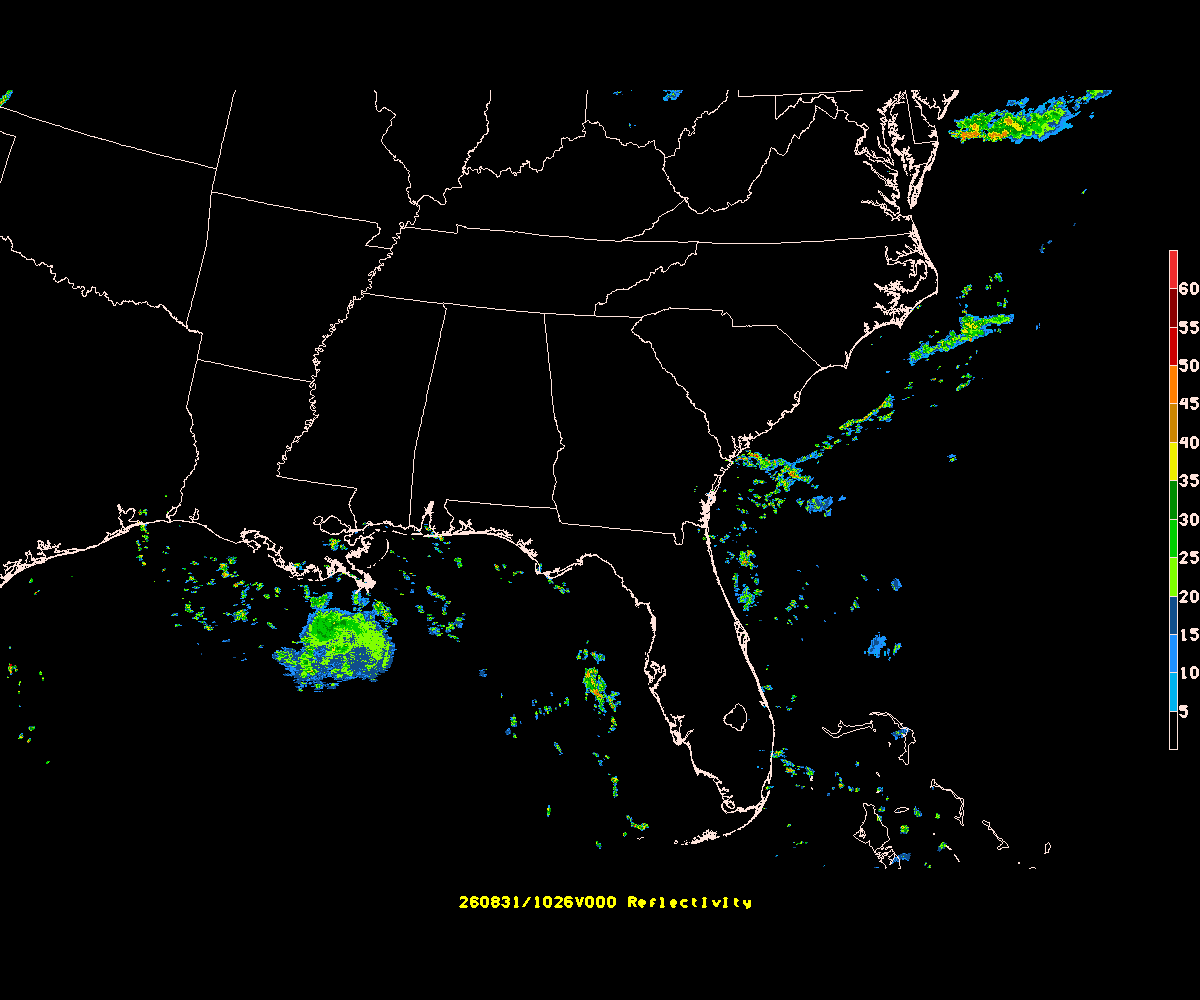
The system is slowly getting more organized, and this morning’s analysis shows cloud tops are cooling a little (indicating stronger convection) and the wind field is trying to organize … that said, the model intensity forecasts are still not really all that enthusiastic. On the left are tracks, on the right the intensity forecasts (click any image to embiggen):


Conditions are somewhat favorable for at least some additional development before it curls inland and decays. The most likely scenario is it will likely bring rain and gusty (but not especially dangerous) winds to the coast over the next couple of days. Some potential for flash flooding, but not a catastrophic storm like most people think of when they think of hurricanes. Calling it a Potential Tropical Cyclone, Tropical Depression, or even a low-end Tropical Storm doesn’t change that calculation much. However, what it is called, and how people react, will be significantly different in each case.
So how are the various entities dealing with this situation?
First let’s look at the official source, the National Hurricane Center. You have to understand that their role is to issue watches and warnings. They never want to be in the position of having a storm of any kind impact land without a warning. So they follow the “forecast of least regret” if there is any doubt. NHC always gets nervous when there is tropical development close to shore, because there may not be much time before landfall to issue those watches and warnings. So in this case, given the proximity to shore, they will likely start advisories on a tropical depression if at all possible, or a “potential tropical cyclone” if it doesn’t quite meet the technical criteria to be a depression. They are also more likely to over-estimate the wind speeds and potential impacts, just in case. I don’t think that’s wrong: their job is to make sure people are ready for the “bad case” scenario. They should always be your go-to for information and following their advice is a good, conservative choice.
Once NHC starts advisories, it triggers a whole lot of actions by every level of government, and most businesses follow along. Most agencies go and pull a book of pre-planned actions off the shelf for each level of storm and start implementing their emergency plans, with some customization depending on how knowledgeable/experienced the agency planners are. Here is one complication, in that these plans often incorporate some level of uncertainty and assuming a storm will be at the upper end or one level worse than the NHC forecast. So if it’s a strong tropical storm forecast, they implement their category 1 hurricane plan. This probably isn’t necessary any more given the improvement in forecasts, and as noted above NHC is already effectively doing that anyway. That is why it almost always seems like weaker storms are not nearly as bad as either NHC or your local emergency plans indicate.
I do think many communities over-react to weaker storms. Part of this is due to the changing nature of “emergency management.” When I started, we had “Civil Defense.” The CD guys (and they were invariably former military officers) were mostly concerned with nuclear war, and got stuck with dealing with natural disasters on the side. They had a very different attitude than the current generation of Emergency Managers (EM) who largely come out of law enforcement. CD trained managers saw the civilian population as an asset to be used in the recovery process, since government is often overwhelmed in an emergency (much less a nuclear war).
EMs tend to see “civilians” as a problem to be managed and kept out of the way while government and authorized contractors sort things out (forgetting that local authorities and police are, in the strict sense, also “civilians” from a military perspective!). I tend to favor the CD model – despite occasional evidence to the contrary (usually every other November), Americans are not stupid, and given the opportunity can display a lot of common sense and will pull together and fix things. Government should facilitate that approach. It astonishes me that in many places it is technically illegal for you to pull debris out of the streets in your neighborhood after a storm to clear them for traffic, but that’s another discussion.
Still, that said, unless you have a well thought out reason not to and are properly prepared, your best course is generally going to be to follow the advice of local emergency managers, especially for stronger storms. Their advice will be conservative and aimed at the “lowest common denominator,” but they are trying to keep you safe and out of the way because otherwise it’s a lot of paperwork 😛 … but seriously, unless you’re really sure or are in an unusual situation, do what they recommend.
Now, here is where the media comes in, and as I often rant, are irresponsible. Sometimes that irresponsibility is unintentional (they will always argue it is), but the pressures of ratings and advertising revenues be it from watching or clicks is overwhelming. They all deny it – and they all do it, with phrases like “download our app to stay updated” and doing alerts in between real storm data updates and doing “teasers” for later reports rather than just coming out and saying what needs to be said, much less saying “don’t worry.”
Just one example that is really misleading is exaggerating winds speeds. The phrase “gusts to tropical storm force” is NOT A REAL THING! Winds are defined by averaging periods. Storms are defined by wind speeds based on sustained two minute winds (although that is complicated). Gusts are measured in much shorter intervals. A minimal tropical storm will have sustained winds of 39 mph. That 40mph sustained wind implies that it will contain gusts of 54 mph inland. So a 45mph wind gust IS NOT a “wind gust to tropical storm force.” If you want to talk gusts, then the wind has to gust to 54 mph to be a tropical storm wind gust.
Weatherbloggers and storm chasers? The quality is ridiculously variable, but they typically depend on clicks for revenues, and have an incentive to keep you “enraged and engaged.” While a few are knowledgeable, many simply don’t know what they are talking about. They have no training or experience in meteorology, oceanography, geophysics, etc. but are pretty good at creating scary graphics. Proceed with care.
So where do I fit? Technically, I don’t. Currently my primary area of funded work is in geopolitics – which is why I’m angry and bitter most of the time (no, not just at Trump, but at both “sides” in the US). Hopefully this phase of my long and disreputable career will be ending soon.
I was (and informally still am) a researcher on the impacts of storms. That includes the impacts of the entire storm process, such as the impacts of watches and warnings, how people react to those watches and warnings, the actual physical damage of the storm, all the way through to the impacts of the post-storm recovery process. So my emphasis is on what the storm is most likely to do – not what it might do.
I am also looking at the bigger picture of the impacts of reacting to a storm. For an incoming major hurricane, duh, it’s easy. But for these weaker storms, the situation is a lot more nuanced.
Anyone who says they always err on the side of caution is a fool because in a lot of situations that is not the course of action that causes the least impacts. Every action has a cost. Evacuations and shutting down a community for a storm has a cost – often in lives as well as financially. Evacuations often cause a spike in traffic accidents, and for people with medical issues storms can delay or disrupt life saving procedures. So for a low end tropical storm, over-reacting can easily kill and injure more people than doing nothing.
And let’s be realistic: in our society, financial disruption carries a cost in lives as well, and especially hits low-income families. Take one example: schools are a major provider of social services, and in an unfortunate number of cases in urban areas are the only source of medical care and, horrifically, the only good meal some kids get in a day. It is often a much more safe environment than at “home”. Now, you can argue (and I agree) that schools shouldn’t be doing those things, but that’s the reality. So unless/until that changes, shutting down schools means something very different for a middle class family than someone at the lower end of the scale.
So I try to focus on likely impacts, not the “bad case” (much less “worst case”) that might make sense for planning. Often I will write “evacuate to be safe, but don’t expect a lot of damage when you come back.” An EM will never say that even if they are pretty sure that’s the case, because they don’t want you to hesitate. I may be wrong, but I have more respect for your common sense than that.
As for the blog, I do it because people ask me to. I do ask for donations to keep this going, but not so secretly keep hoping they will dry up so I can stop regular blogging so I can retire 😛 . But apparently enough people find this useful, and I continue for them as well as the fact I get irritated by all the hype around storms. Yes, storms can be dangerous. But many are hazardous (meaning only dangerous if you do dumb things), and others are simply inconvenient or no worse than lots of other storms that don’t get the attention. That nuance gets lost in the hype.
Thankyou for always sharing your knowledge and truthful information as the hype surrounding storm forecasts is Unnerving. I appreciate your honesty and insight.
Love you man. Yes, your work is important. The NY TIMES just published an article on the Google AI tool helping with forecasts and I look forward to reading your eventual commentary on them at tool. Keep at it friend
Ron Melander, downtown Savannah
I trust you and only you! You are my calm!!! Tell me a lie and I will believe you. You are the best of the best. Thank you for all the work you do to keep us safe!
Thank you. Sadly for you, I intend to continue to donate to your blog. Sorry.
Hunter Watts
Good analysis, as always. Old-timers on the Gulf Coast look forward to storms such as this one. It’s been a dry July and August, and the cooler weather signals cooler weather.